


SPCE’s Role in Sustainable Urban Development
Advancing Education, Workforce Development and Economic Resilience
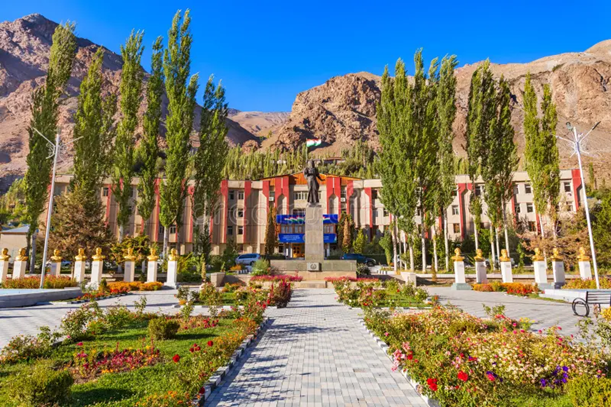
One of the most transformative initiatives among these has been the University of Central Asia’s School of Professional and Continuing Education (SPCE), which plays a central role in fostering human capital, promoting economic resilience, and enabling inclusive growth.
SPCE is one of the first operational divisions and has been the driving force behind the university's outreach to the broader society.
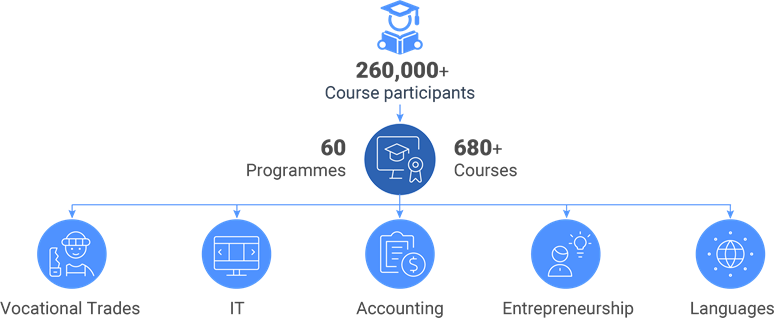
Since its establishment in 2006, SPCE’s programmes have been developed in close consultation with employers, local government, and development partners to ensure they are aligned with market needs. For example, training in electrical work, plumbing, and home appliance repair has responded directly to skill gaps in the labour force, while entrepreneurship and business development courses have supported the growth of small enterprises across GBAO. SPCE’s innovative, context-sensitive approach has made significant contributions to the reduction of outmigration, upskilling the youth and generating new knowledge and skills conducive to the environment.
The socio-economic environment of Khorog is positively impacted by SPCE in a number of ways. Like all other educational institutions, UCA has always aimed for the development of human capital, skills development and regional capacity building. This is demonstrated through its efforts in increasing access to affordable, adaptable and locally responsive education. Through its outreach programmes, such as English in Villages and Math in Villages, SPCE has expanded its reach into remote and marginalised areas such as Darvaz, Ishkashim, Murghab, Shugnan, Roshtqala, Rushan, and Vanj. Similarly, recognising the critical language barriers faced by Government employees, teachers and local residence of Murgab district, SPCE delivered an intensive four-month Tajik Language course, highlighting the significance of the national language. Hence, SPCE has been instrumental in promoting an inclusive development, bridging the urban-rural divide and ensuring that individuals from all backgrounds can benefit from the educational opportunities that drive socio-economic progress.
In a region like GBAO, where formal employment opportunities are limited and average monthly wages remain below the national average, SPCE Khorog has become a vital driver of economic resilience and self-reliance. By equipping individuals with market-relevant skills in entrepreneurship, accounting, IT, and language proficiency, SPCE has enabled a new generation of learners to create livelihoods through self-employment, freelance work, and small business ventures. Many SPCE graduates have successfully launched local enterprises – bakeries, tailoring shops, IT repair services, and farms – that contribute to economic dynamism and job creation. Programmes like the Khorog Centre for Entrepreneurship (KCE), developed in partnership with GIZ, exemplify this impact. Since its inception, KCE has trained over 1,700 learners – 70% of whom are women – through hands-on courses, mentoring, and business development support. In parallel, the Women Micro-Entrepreneurs (WME) programme targets gender disparities by providing women with skills in trades such as baking and sewing, along with business management training. These initiatives empower marginalised groups, strengthen household incomes, and contribute to broader economic stability and social cohesion.
Beyond technical and vocational skills, SPCE also recognises the importance of financial literacy as a foundation of long-term economic empowerment. Initiatives such as Global Money Week, a major flagship event celebrated annually, help youth better navigate the complexities of modern urban economies by equipping them with essential financial planning, family budgeting and decision-making skills. This initiative fosters long-term economic stability by ensuring that young people, from an early age, gain the knowledge, skills, mindsets and behaviours for making sound financial decisions and develop financial resilience.
SPCE has also played a vital role in helping communities adapt to economic disruptions and infrastructural changes. In response to displacement caused by the construction of the Sebzor Hydro Power Plant, SPCE launched a Livelihood Restoration Project. Through the programme, displaced families are provided with vocational training in essential skills and supported to rebuild their livelihoods, contributing to long-term economic stability.
Furthermore, SPCE’s collaboration with Khorog State University to establish a Tech Park signals a strategic investment in innovation, technology, and future-ready skills – positioning Khorog’s youth to compete in both regional and global markets.
These efforts reflect SPCE’s commitment to promoting sustainable urban development by building human capital, fostering entrepreneurship, and strengthening local institutional and human capacity. Through targeted education and skill-building programmes, Khorog is evolving into a resilient, self-sustaining urban centre capable of adapting to future challenges.