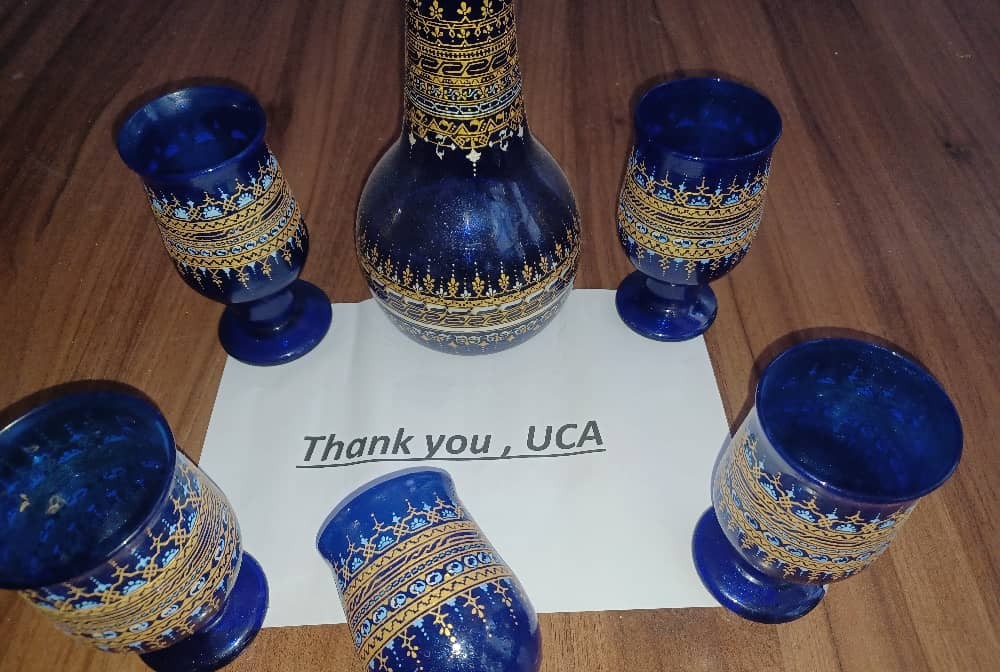


Related Items


UCA Empowers Afghan Women to Turn Skills into Enterprises
"Sometimes a small seed, if planted in the right soil, turns into a great hope."
For Amina Rahimi*, those words capture the journey she and her sister, Laila Rahimi, took when they co-founded a small enterprise in Kabul. What began as a modest idea grew into a source of income, confidence and opportunity - made possible through entrepreneurship training and mentorship supported by the University of Central Asia (UCA).
Before joining the entrepreneurship and women’s empowerment programme delivered through UCA’s School of Professional and Continuing Education (SPCE) in Afghanistan, Amina and her sister had never imagined running a business. With training, consultations and hands-on mentorship provided through the UCA’s Afghan Women Access to Knowledge Economy (AWAKE) project, their idea became a reality. They launched their enterprise in a small 3 × 4-metre room in their basement, overcoming family concerns and space limitations.
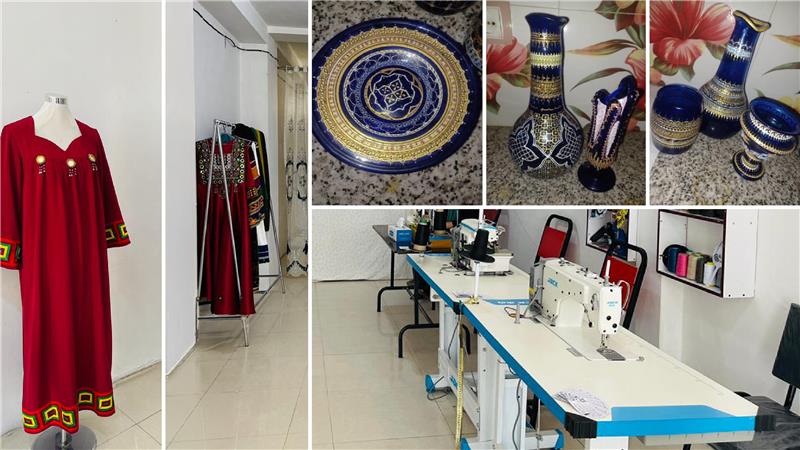

Amina was one of 20 award winners selected through a competitive business pitch process supported by UCA SPCE. Among them, eight exceptional women entrepreneurs from Kabul were recognised for their innovation; each received USD 1,000 in seed funding to support the growth of their businesses.
Amina’s story reflects a much broader initiative. UCA SPCE has supported 1,400 female alumni across Afghanistan through a comprehensive entrepreneurship training programme delivered both offline and online under the AWAKE project. From this cohort, 98 women advanced to a structured mentorship phase, and 67 participants were shortlisted to present pitch decks. The University of Central Asia receives support for this initiative from Gates Foundation.
By delivering market-relevant training and entrepreneurship support through SPCE, the University contributes to livelihood creation and local economic resilience, while ensuring that women are able to participate meaningfully in income-generating activities within their communities.
* Details have been modified to ensure the privacy of those involved.
Disclaimer: This publication is based on research funded by the Gates Foundation. The findings and conclusions contained within are those of the authors and do not necessarily reflect positions or policies of the Gates Foundation.